101 terms documented
What does it mean? Clear definitions for Gen Alpha slang, streamer vocabulary, and older internet speech — with origins and real usage.
101
Terms documented
15
Currently rising
47
Stable / mainstream
Terms gaining momentum right now.
Locked in means you are intensely focused — no distractions, full commitment to the task. People say they need to 'lock in' for exams, work, or a clutch moment. Memes contrast a silly/'tweaking' face with a serious locked-in stare.
To crash out means to lose composure and act recklessly, impulsively, or aggressively — often with little regard for the fallout. As a noun, a 'crashout' is someone known for that behavior. Online it often overlaps with 'meltdown,' but the AAVE sense carries a sharper idea of risking yourself because consequences no longer matter.
Main character energy describes carrying yourself like the star of a movie — romanticizing daily life, prioritizing your plot, and radiating confidence. Can be aspirational ('I'm channeling main character energy') or lightly mocking someone who's being dramatic. Related to aura and 'it's giving protagonist.'
A blunt directive — 'touch grass' — telling someone to get offline, go outside, and reconnect with the physical world. It implies the target is so deep in internet culture or so agitated about something purely online that they have lost touch with reality. The 'grass' being literal — dewy, actual outdoor grass — underlines the irony: this is the most basic real-world experience. Often deployed as a final, conversation-ending response when someone is too invested in an online debate.
A fit check is a short video or photo set showing off an outfit — usually with a spin, pose, or caption asking for approval. 'Fit' means outfit; the 'check' is both inspection and flex. The format turned everyday dressing into shareable content and tied into sneaker culture, haul culture, and GRWM ('get ready with me') videos.
The phrase 'it's giving' (often shortened to just 'giving') describes the impression or vibe something radiates. 'It's giving main character,' 'it's giving 2012,' 'it's giving chaotic neutral' — each phrase conveys a feeling or reference without a direct explanation. It comes from ballroom culture's 'she's giving face' (she's serving/delivering a look), adapted into a broader statement about any energy or aesthetic. The phrase can be used positively ('it's giving royalty'), critically ('it's giving desperation'), or humorously ('it's giving Tuesday morning').
Dad bod describes a man with a bit of softness around the middle — not gym-sculpted, not extreme — often associated with comfortable clothes and 'I have kids or could have kids' energy. The term started as gentle ribbing but flipped into body-positive reclamation: less pressure than six-pack culture, more relatable.
'Hits different' means something affects you more deeply or oddly than expected — usually positive but context-dependent. A breakup song 'hits different' at 2 a.m. Rainy-day coffee hits different. The phrase captures situational mood shifts rather than objective quality.
No cap means 'no lie' or 'for real' — you're emphasizing that a statement is true. 'Cap' means a lie or exaggeration; 'capping' is lying; 'stop capping' means stop lying. Common in hip-hop and AAVE, then mainstream Gen Z speech via social media and music in the late 2010s.
'Frying' (usually 'this is frying me') means something is so funny or ridiculous you can barely handle it — a synonym for 'sending me' or 'taking me out.' A related but distinct use, 'you're fried,' means someone has messed up badly or is doomed in a social or situational sense, closer in meaning to 'cooked.'
Jit is slang for a young person or kid, and by extension someone new or inexperienced at something (similar to 'rookie'). It's usually neutral or affectionate but can carry a mildly negative edge implying the young person in question is acting unwise or impertinent.
A vibe check asks 'what's the energy here?' — checking in on mood or group atmosphere. The 2020 meme version flipped it into a surreal punishment: a character appears, assesses your vibes, and attacks if you fail. Both uses coexist: sincere wellness check-in and absurdist bonk meme.
Steez describes a unique, confident personal style that looks effortless rather than forced — a blend of 'style' and 'ease.' It can describe an outfit, a skate trick, or someone's overall demeanor, and functions as both a noun ('you know my steez') and an adjective ('that trick was pure steez').
Sendy describes something bold, daring, or reckless in a fun way — a line down a mountain, a trick, or just a life decision made with full, joyful commitment and no hesitation. It's an adjective built from the older phrase 'send it,' meaning to commit fully to a risky action.

In online slang, “based” praises a person who stays true to themselves and speaks their mind without apology. The term signals confidence and authenticity, often despite unpopular opinions.
Pre–Gen Alpha terms that still shape how people talk online.
Locked in means you are intensely focused — no distractions, full commitment to the task. People say they need to 'lock in' for exams, work, or a clutch moment. Memes contrast a silly/'tweaking' face with a serious locked-in stare.
To crash out means to lose composure and act recklessly, impulsively, or aggressively — often with little regard for the fallout. As a noun, a 'crashout' is someone known for that behavior. Online it often overlaps with 'meltdown,' but the AAVE sense carries a sharper idea of risking yourself because consequences no longer matter.
A red flag is a warning sign that someone may be bad news — love bombing, rude to waitstaff, never texting back. A green flag is positive behavior — communicates clearly, respects boundaries. TikTok turned lists of flags into trend templates; the terms also apply to jobs, friends, and brands.
Main character energy describes carrying yourself like the star of a movie — romanticizing daily life, prioritizing your plot, and radiating confidence. Can be aspirational ('I'm channeling main character energy') or lightly mocking someone who's being dramatic. Related to aura and 'it's giving protagonist.'
A blunt directive — 'touch grass' — telling someone to get offline, go outside, and reconnect with the physical world. It implies the target is so deep in internet culture or so agitated about something purely online that they have lost touch with reality. The 'grass' being literal — dewy, actual outdoor grass — underlines the irony: this is the most basic real-world experience. Often deployed as a final, conversation-ending response when someone is too invested in an online debate.
To 'glow up' is to undergo a visible, positive transformation — most commonly in appearance (losing weight, improving style, better skincare) but also in confidence, career, or life quality. 'She really glowed up' acknowledges a meaningful change for the better since some earlier point in time. The 'glow up challenge' format involves side-by-side 'before and after' comparisons. The term is applied to people, but also to brands, cities, movies, and anything that has improved over time.
Girl boss (or #GirlBoss) originally meant a woman building her own business or career on her terms — aspirational, pink-branded, hustle-culture feminism. By the late 2010s it became a punchline for performative empowerment (Scamanda, Theranos discourse, 'gaslight, gatekeep, girlboss' memes). Used sincerely it is a compliment; used ironically it mocks empty slogans over structural change.
A fit check is a short video or photo set showing off an outfit — usually with a spin, pose, or caption asking for approval. 'Fit' means outfit; the 'check' is both inspection and flex. The format turned everyday dressing into shareable content and tied into sneaker culture, haul culture, and GRWM ('get ready with me') videos.
Karen names a stereotype: a middle-aged woman who demands to speak to the manager, weaponizes politeness, or calls police over minor conflicts — often with racial entitlement undertones in viral videos. 'OK Karen' dismisses bad-faith arguments. Critics note the meme can mask misogyny or reduce complex racism to a haircut joke; defenders treat it as documenting real behavior.
Slang that has crossed into everyday use.
Girl boss (or #GirlBoss) originally meant a woman building her own business or career on her terms — aspirational, pink-branded, hustle-culture feminism. By the late 2010s it became a punchline for performative empowerment (Scamanda, Theranos discourse, 'gaslight, gatekeep, girlboss' memes). Used sincerely it is a compliment; used ironically it mocks empty slogans over structural change.
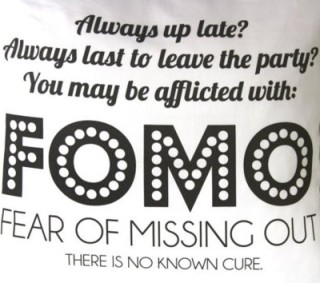
FOMO means fear of missing out: anxiety that others are having rewarding experiences without you. Online it drives streak maintenance, limited drops, live events, and compulsive checking.
Saying someone 'understood the assignment' means they delivered exactly what the moment called for — outfit, pose, joke, performance, or brand energy. It's complimentary slang for excellence that feels intentional, not accidental. Opposite vibes: mid, cooked, or failing the assignment.
Standing on business means taking care of what you're supposed to — work, money, goals, accountability — without playing around. It can praise someone who's locked in, or call out someone who isn't. Tone ranges from motivational to lightly roasting people who make excuses.
Delulu is short for delusional: holding an unrealistic belief, most often that a crush will notice you, that a celebrity ship is real, or that an unlikely fantasy will come true. Fans use it playfully ('delulu is the solulu') as well as critically. The word moved from K-pop/fandom Twitter into mainstream TikTok and Gen Z speech.
Originally refers to Live Action Role Playing — physical events where participants dress up and act out fictional scenarios. On the internet, 'LARPing' means performing or pretending to be something you're not. Calling someone a 'larper' accuses them of cosplaying an identity rather than genuinely living it.
'It's so over' declares total defeat; 'we are so back' flips to irrational hope minutes later. Posted as a pair, the phrase mocks how online fans experience every setback as apocalypse and every small win as redemption. Used for games, elections, dating, and any volatile storyline.
SYBAU stands for 'shut your bitch ass up,' a blunt way of telling someone to stop talking. It's used both seriously in arguments and jokingly as banter between friends, with tone deciding whether it lands as an insult or a bit. Kids frequently tell parents it means something innocent like 'stay young, beautiful, and unique' to hide the real meaning.
Chud calls someone a gross, loud, terminally online bigot or edgelord — the guy in replies who makes everything worse. It references the 1980s horror film C.H.U.D. (Cannibalistic Humanoid Underground Dweller), picked up ironically on Something Awful and later left-leaning Twitter as shorthand for 'chan-brained' antagonists.
Girl math is joking mental accounting where purchases feel justified through silly rules: returning something means you made money, free shipping saves more than the item cost, or buying sale items is 'earning.' It is not serious finance — it is a TikTok bit about how people rationalize spending, often gendered in the name but used broadly.
'He's cooking' or 'she's cooking' means someone is doing great, dominating a task, or successfully working toward a goal — in gaming, debate, sports, or creative work. 'Let him cook' is a request not to interrupt someone who's clearly on a roll. This is the direct opposite of 'cooked,' which means finished or doomed; 'cooking' is the in-progress, winning state, while 'cooked' is the terminal, losing one.
An 'edit' is a short fan-made video edit — usually set to music, often heavy on smash cuts and beat-synced clips — built around a particular celebrity, fictional character, or moment. Edits are distinct from older 'fan vids' and have their own visual style, and the word doubles as a verb ('I made an edit') and a genre label people search and scroll for on TikTok and Instagram Reels.
All 101 documented slang terms.
101 slang terms
