
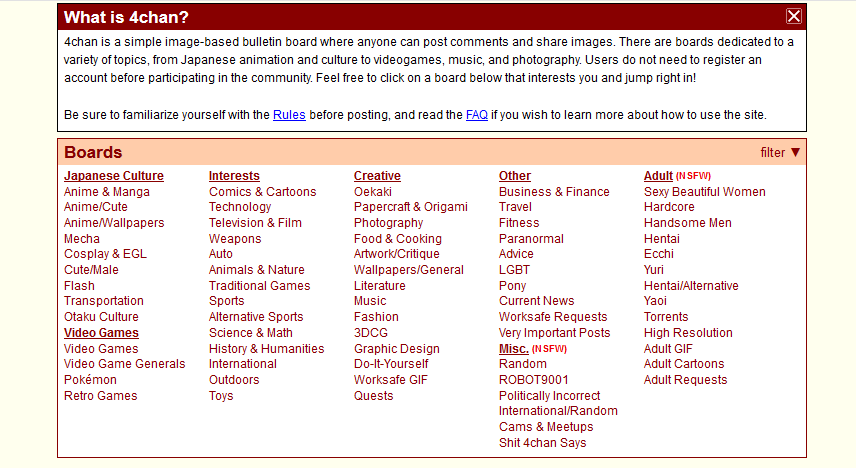
4chan
The anonymous English imageboard that forged Pepe, rickrolls, rage comics, and a huge share of modern meme grammar.
Overview
Industrialized anonymous meme production: rapid iteration, reaction faces, raids, and board culture (/b/, /v/, etc.). Downstream platforms spent a decade remixing formats born on 4chan.
Cultural scores
Editorial estimates of cultural weight — Current Popularity tracks how much people are posting about this now, not historical fame.
Current Popularity = how actively people are posting about this today. Influence = lasting footprint. Cringe = online reception. Brainrot = absurdist energy. Scores last reviewed 2026-08-16. How scoring works
Timeline
1
Founded 2003 as an English-language imageboard inspired by Japanese boards
2
Boards like /b/ became engines for early viral formats and copypasta
3
Incubated or amplified Pepe, Wojak culture, rickrolling, rage comics, and more
4
Remains culturally influential even as mainstream meme hubs shifted to Reddit/TikTok
Media
Related entries
Culturally linked — not random recommendations.

Pepe the Frog
MemeThe most versatile meme character in internet history — from webcomic frog to cultural icon to political controversy to ongoing reclamation.

Rage Comics
MemeThe original internet storytelling format — stick-figure comics with expressive face characters that defined 2010-era meme culture.

Wojak
MemeThe foundational 'Feels Guy' — a simple crying face that became the most versatile meme template on the internet.

Myspace
EventThe mid-2000s social network of Top 8s, profile songs, and HTML chaos — internet identity before Facebook flattened the feed.

Newgrounds
EventThe Flash portal that incubated early web animation, games, and viral weirdness — from Tankmen to Numa Numa mirrors.

Ceiling Cat
MemeThe cat peeking through a ceiling hole — imageboard god of surveillance jokes and LOLcat theology.
References
Sources behind this entry. Prefer primary reporting and established culture archives over rumor.
- 4chan — Wikipedia
en.wikipedia.org
- 4chan — Know Your Meme
knowyourmeme.com